
To open a small music venue, you need a room where zoning allows live music, a legal capacity set by your fire department, a liquor license if you'll run a bar, music licenses from the performing rights organizations, sound that keeps the neighbors on your side, insurance, and a calendar of shows you sell from your own website. Leave the most time for licensing and the build-out, and start both before you book a single act.
Decide what kind of room it is
Three choices shape almost everything that follows:
- Seated or standing. A seated listening room holds fewer people than the same room standing, and suits quieter acts at higher ticket prices. A standing room holds more and suits louder bands.
- All ages or 21 and over. All-ages shows widen your audience but change how you run the bar, and some cities and states restrict them.
- Bar first or music first. A bar with music five nights a week runs differently from a venue that only opens on show nights, with different staff, hours and licenses.
Licenses and permits to check
- Zoning and occupancy. Your city decides whether live music is allowed at the address, and your fire department or building inspector sets the room's legal capacity. That capacity is the most tickets you can sell for a show, so get the number before you plan your prices.
- Liquor license. Issued by your state, often with city or county approval too, and limited in number in some places. The federal Alcohol and Tobacco Tax and Trade Bureau keeps a list of every state's alcohol authority. Apply as early as you can, before you spend money on the build-out.
- Music licenses. Covers, and recorded music between sets, need public performance licenses. The US Copyright Office names ASCAP, BMI, SESAC and GMR as the most used performing rights organizations, which license music to bars, restaurants and other venues (Copyright Office guide for musicians, checked November 2026). Each sets its own fee from things like your capacity and how often you have music, so ask each one for a quote before you open.
- Entertainment permits. Some cities require a separate permit for live music or dancing.
- Food permit, if you serve food.
- Noise. Read your city's noise rules for the hours you'll be open, and meet your neighbors before your first show, not after the first complaint.
For the business basics, the SBA's guide to licenses and permits is a good start. This is general information, not legal advice, and venue rules differ a lot between cities.
Insurance
Talk to a broker who insures venues. Expect to need general liability, liquor liability if you serve alcohol, and property cover for the sound system and fit-out. The SBA notes that businesses with employees must carry workers' compensation and unemployment insurance, and that some states require more (SBA, checked November 2026). Touring acts and promoters may ask for your insurance certificate before they book.
What it costs to open
There's no useful national average here. A sound system for 100 people and one for 400 are different purchases, and build-out depends entirely on the room. Get quotes for these lines, for the room you've found:
| Line | What drives the cost |
|---|---|
| Lease and deposit | Size, location, and how long the landlord gives you rent-free during the build-out |
| Build-out | Stage, bar, soundproofing, restrooms, step-free access, and whatever the inspectors ask for |
| Sound | PA, monitors, mixing desk and microphones, sized to the room |
| Lighting | A simple stage wash to start; add more later |
| Backline | Optional: a house drum kit and amps make booking easier |
| Licenses and insurance | Your city and state's fees, and broker quotes |
| Opening bar stock | Two or three weeks of the drinks you expect to sell |
| Staff | Bar, door and a sound engineer for the first month of shows |
| Website and ticketing | A monthly plan, plus a fee on each card sale |
How a show makes money
Small-venue deals usually take one of three forms: a flat fee for the act (a guarantee), a split of the door, or a guarantee plus a split once ticket sales pass a set number. The bar stays with the venue unless you agree otherwise.
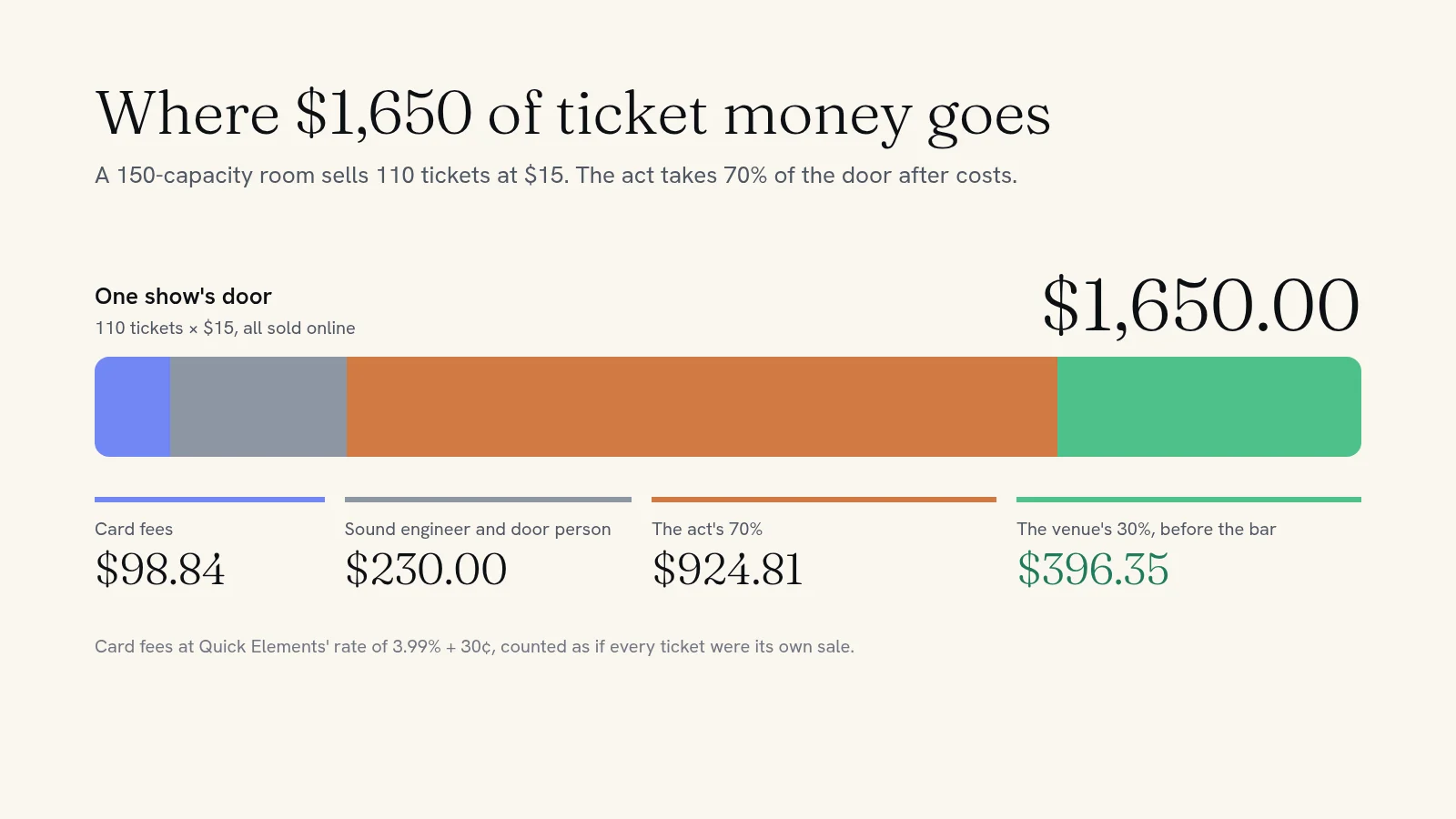
Here is a door split worked through. Say a 150-capacity room sells 110 tickets at $15, all online. The sound engineer costs $150 and the door person $80, and the act gets 70% of the door after those costs and the card fees:
| Amount | |
|---|---|
| Ticket money, 110 × $15 | $1,650.00 |
| Card fees, 3.99% + 30¢ a ticket | $98.84 |
| Sound engineer and door person | $230.00 |
| Left to split | $1,321.16 |
| The act's 70% | $924.81 |
| The venue's 30% | $396.35 |
The venue's share of the door here is $396.35, and the bar takings come on top. Agree each deal in writing before the show is announced, including who pays for promotion and what happens if the show is cancelled. If you're choosing where to sell tickets, our ticket fee calculator shows what each ticket seller would take from your price.
Fill the calendar
- Start with local acts who bring their own crowd, and ask how many they expect before you agree a deal.
- Work with a local promoter for touring acts until you have your own contacts with agents.
- Give quiet weeknights a regular format, such as a jazz jam, trivia, or an open mic night.
- Sell early-bird tickets for bigger shows, and put the next show on sale before the current one ends.
- Ask every ticket buyer if they'd like your monthly line-up email, and send it on the first of the month.
- Rent the room out for private parties on nights without a show.
Sell tickets from your own site from day one
On a Quick Elements site each show gets its own page on your web address, with the line-up, door time, age rule and tickets:
- Ticket types such as general admission, an early-bird price and a seated table area, each with its own price, number available and limit per order.
- Shared capacity across those ticket types, set to your legal capacity, so the room can't be oversold.
- Free tickets for open mics and free shows, so you know how many are coming.
- Door sales and guest-list names entered by hand, as cash, card, check or free, counted against the same capacity.
- One list of everyone coming to each show, searchable by name at the door.
- Confirmation and reminder emails you write for each show.
Two limits to know about: there's no seating chart for picking a specific seat, and there are no scannable tickets, so you check people in by name from the list. For a standing room or a small seated one, that's usually all you need. The music venue design comes with a Thursday stand-up night already selling $14 standing and $20 table tickets. Card payments cost 3.99% + 30¢ a sale, with processing included and nothing added to the buyer's total.
Your next step
Before you sign a lease, get three answers: whether live music is allowed at the address, what the room's legal capacity would be, and how long a liquor license takes in your state. Those decide whether the room can work. Then see how our live venue sites put a season of shows on sale.