
To sell dance recital tickets online, make one page per show, list on each page which classes dance in it, and sell general admission tickets by type (adult, child, and a free lap ticket for babies). Cap tickets per order so every dancer's family gets in, open sales in stages with the families of dancers in that show first, and keep a few seats back for the door. Families who want to pick numbered seats from a chart need a specialist box office tool; the rest runs from your studio's own website.
Split the recital into shows
Once a studio passes a hundred or so dancers, one show runs too long and too many families want the same seats. Most studios split the recital into two or three shows and put each class in one of them, usually by age or style. Then make it impossible to buy for the wrong show:
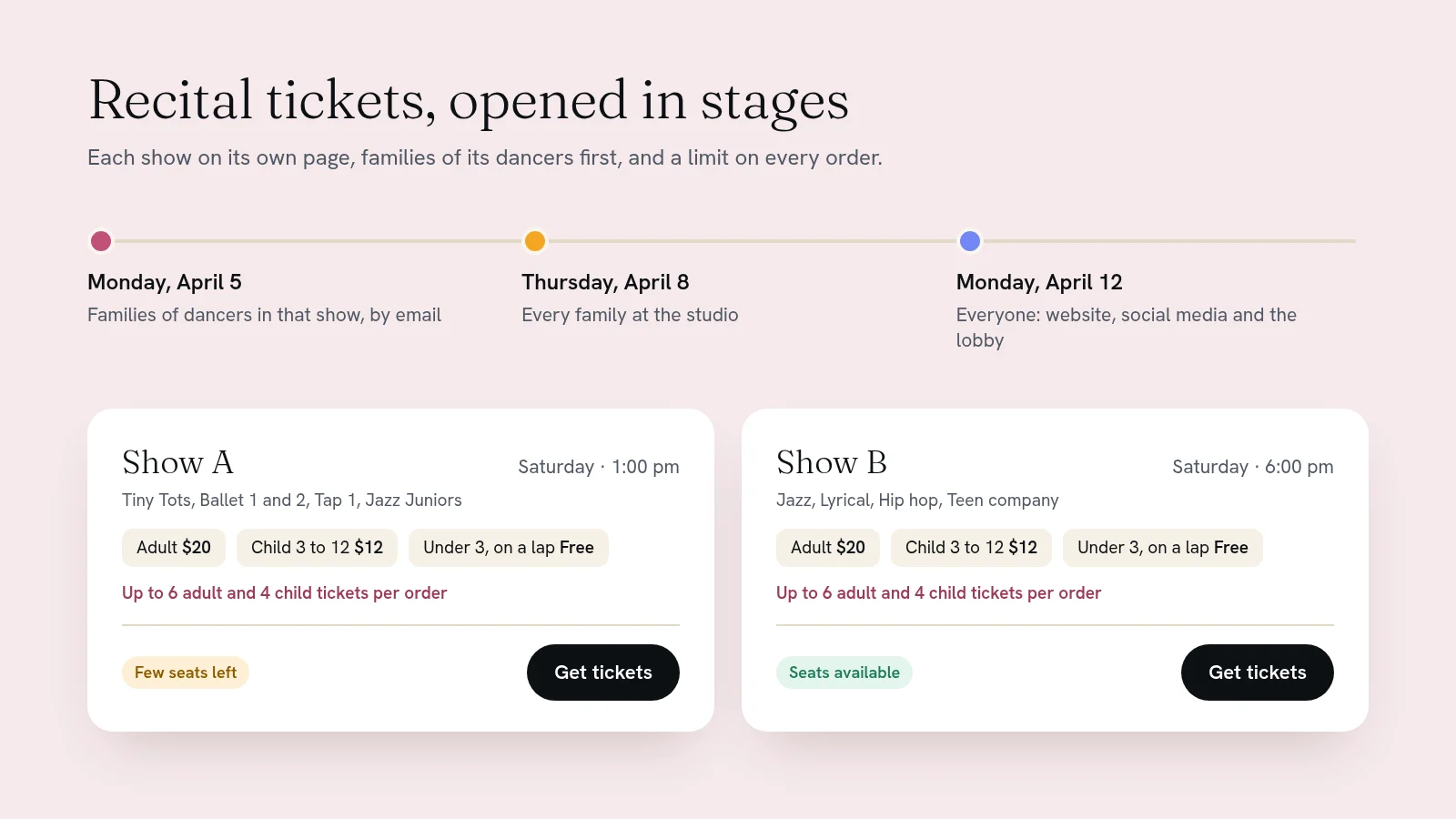
- Give each show its own name and time: "Show A, Saturday 1:00 pm" and "Show B, Saturday 6:00 pm".
- List the classes in each show at the top of its page: "Show A: Tiny Tots, Ballet 1 and 2, Tap 1, Jazz Juniors".
- Email each family the link to their dancer's show only, and say which one it is in the subject line.
A family with dancers in both shows buys for both. Tell them so in the same email, before they ask.
Tickets and prices
Three ticket types cover nearly every recital:
| Ticket | Example price | Notes |
|---|---|---|
| Adult | $20 | Anyone 13 and over. |
| Child, 3 to 12 | $12 | Takes a seat. |
| Under 3, on a lap | Free | No seat, but a ticket so the front desk knows they're coming. |
Work the price back from what the day costs. If the theater, its crew and the programs come to $4,000 for two shows, and you expect to sell 600 seats across both at an average of $17, tickets bring in $10,200 and cover the day with room to spare. If the sum only works at full houses, raise the price a dollar or two now. Parents notice a price rise less than a recital that loses money.
A limit per dancer's family
The complaint every studio owner dreads is "I couldn't get tickets to see my own daughter dance". It happens when early buyers take ten seats each. Set the most per order on each ticket type, such as six adults and four children, and say it on the page: "Up to 6 adult tickets per family, so every dancer's family gets in".
A limit per order is not a limit per family, because a family can place a second order. If a show is close to full, look down the list of buyers by name and call anyone who has bought twice. A friendly call usually frees the seats.
Open sales in stages
Staged sales are how studios make sure dancers' families get in first. A common plan, three weeks or more before the show:
| When | Who gets the link |
|---|---|
| Monday, April 5 | Families of dancers in that show, by email |
| Thursday, April 8 | Every family at the studio |
| Monday, April 12 | Everyone: your website, social media and the lobby noticeboard |
Be clear with yourself about what this is. The show's page is public from the moment it exists, so a stage is a head start for the people you email, not a locked door. Quick Elements has no setting that hides a show until a date and then opens it. For most studios a head start of a few days is enough, because outsiders don't go looking for a recital page before it's announced.
If you need a firm guarantee, book the first seats yourself. Let each family ask for up to six seats on a short form, take payment at the front desk, and enter their tickets by hand before you send any link. Those seats are taken before anyone else can buy.
Numbered seats, and what to do instead
Some parents arrive expecting to choose seats on a chart, the way they would for a concert. Quick Elements doesn't have a seating chart, so you have three options:
- General admission. Doors open 45 minutes early and families sit where they like. Most recitals work this way.
- Priced sections. Sell "Front orchestra" as its own ticket type, with its own price and number of seats, and have an usher seat those families in that block. It can't oversell, and it gives keen families a way to sit close.
- A specialist box office for the recital. Services built for reserved seating let families pick seats from a map. Eventbrite, for example, lets you draw a seat map of the venue and have buyers choose their seats (Eventbrite for theaters, checked November 2026). Some theaters also run their own box office and will insist you use it, so ask before you set anything up.
Extras families will buy
- Flowers for the dancer, picked up in the lobby after the show. Order from a local florist by the number sold.
- A printed program with every dancer's name in it.
- A recital video. Recordings of dancers performing to recorded music can raise music rights questions that a live show doesn't, so check what your studio's music licenses cover before you sell one.
Sell these as extras that can only be bought with a ticket, so nobody orders flowers for a show they aren't attending.
On the day
Print the list of buyers for each show, sorted by family name, and put two people at the door with it. Seats you kept back go on sale at the door for cash, entered by hand so they count against the same total as the online tickets. Teachers, helpers and the person running sound get comp tickets, entered the same way at no charge. Our guide to checking guests in at the door covers running the line.
Set it up on your studio's website
On a Quick Elements site, each show gets its own page on your web address, and families pick their tickets and pay in a minute on their phones.
- Create each show with its date and time, and the class list at the top.
- Add adult, child and lap tickets with their prices and the most per order on each.
- Have the ticket types sell from one shared count of seats, so the theater is never oversold.
- Add flowers and programs as extras that come with a ticket.
- Write the confirmation email yourself (which door, when dancers are dropped off, no flash photography), and send a reminder two days before.
- Enter door sales and comps by hand.
The page warns when few seats are left and stops selling when a show is full. Card sales cost 3.99% + 30¢ each, with card processing included and nothing added to the parent's price. Running a school or community show instead? The same steps, with more performances, are in our guide to selling tickets for a school play.
Before you announce the recital
Decide which classes go in which show and write the date each stage opens. Those two decisions settle most of the emails you'd otherwise get in April. See how it all fits together for dance studios, or pick a plan and build the recital pages this week.